

made with
Journaling for Financial Health
June 21, 2022
By Siobhan Stewart
How to Use Journaling to Improve Financial Planning Habits
Numbers and spreadsheets are typically the first things that come to mind when you hear the phrase “financial planning.”
But did you know that keeping a journal can seriously transform your life, including your financial situation?
You can use journaling to establish your long-term financial goals, increase your earning potential, and track your spending habits to help achieve financial freedom.
Are you ready to take control of your finances but don’t know where to start?
This post will teach you how to use journaling to improve your financial habits.
Let’s dive in.
Establish your financial goals
One of the best things about journaling is that it helps you figure out what you value in life, which will help you make better money decisions.
The first step in improving your financial planning habits is establishing your financial goals.
This can seem a little overwhelming, but don’t worry. Start by asking yourself a few questions.
For example, do you want to purchase a house? Do you want to travel the world? Do you want to have kids? Do you want to save for retirement?
Once you narrow in on the answers to these questions, you can turn them into SMART financial goals. That means creating goals that are specific, measurable, attainable, realistic, and time-bound.
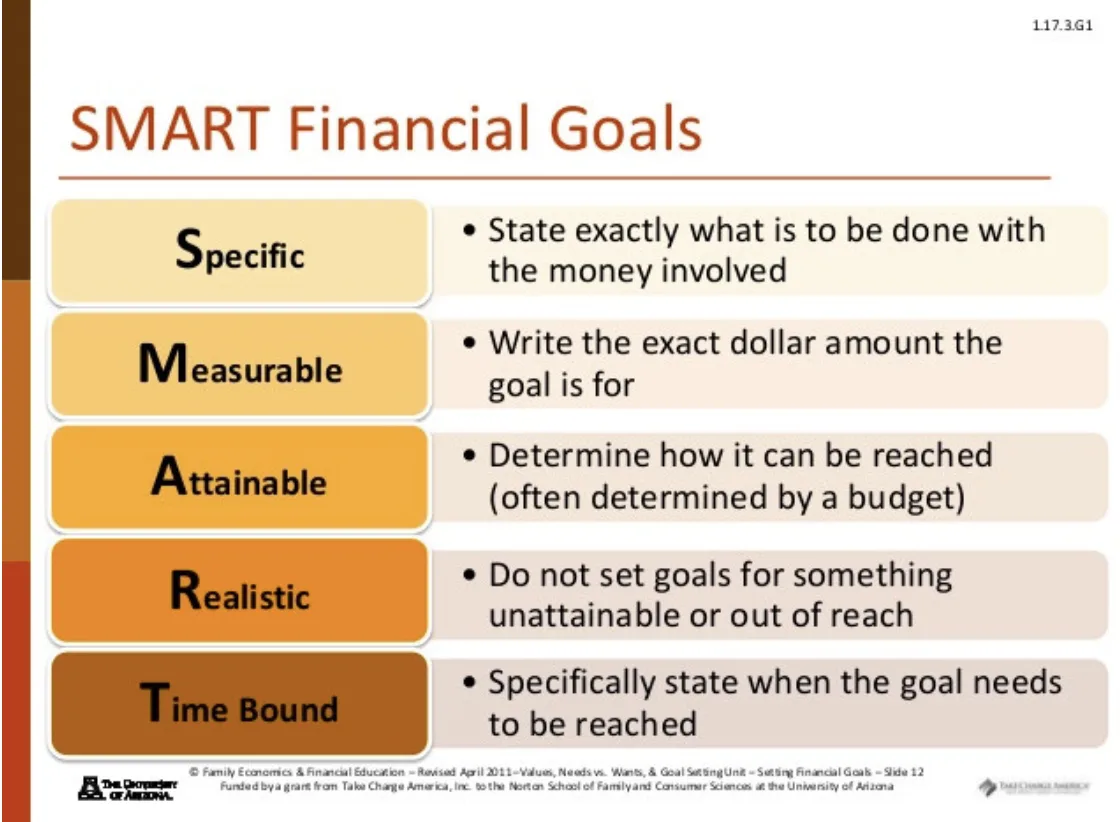
Perhaps I want to save up to buy a new car. How do you break that down into a SMART goal?
-
- Specific: Purchase a new 2022 Subaru Outback.
- Measurable: The purchase price is $28,320.
- Attainable: Save $100 from every paycheck.
- Realistic: Don’t expect to purchase a Lamborghini.
- Time-bound: Complete the purchase by May 2023.
Once you’ve identified these goals, write them down in a journal and keep them close at hand. That way, they’re always on your mind, and you can hold yourself accountable for your goals.
The next step is deciding how to set aside that amount of money every week or month using a budget.
Create a budget and track expenses
A budget helps you track how much you earn and how much you spend over a certain period to achieve a financial goal.
Start by writing down how much money you make monthly at the top of your journal. The key to saving money is understanding your monthly income, monthly expenses, and spending less money than you make.
The most transparent way to track your expenses is by writing everything down in a journal and holding yourself accountable for your spending habits.
So, how do you figure out what your expenses are? You can start by looking at last month’s credit card receipts and bills and jotting them down.
Try to create different categories of expenses like:
- Auto & Commuting
- Bills & Utilities
- Dining & Drinks
- Entertainment
- Groceries
- Health & Fitness
- Rent & Mortgage
- Kids
- Fees & Interest
- Pets
- Personal Care
- Shopping
- Travel
The most significant benefit of personal finance journaling comes from identifying expenses that are often overlooked by budget planners and don’t necessarily fit into any of these categories. This includes things like gifting money to family members on special occasions or quarterly taxes owed to the government.
If something looks unusual, such as a substantial purchase, this will stand out more clearly than other forms of record-keeping, where everything gets lumped together at the end of each month or quarter.
Journaling all of your expenses is beneficial because it requires regular attention to detail. As such, if you’re using a journal to record your expenses, it forces you to take note of purchases and adapt as needed to stay within budget.
Brainstorm new ways to save or earn money
Journaling is an excellent way to brainstorm new ways to save money or bring in additional income to help build financial independence.
When journaling, think about how you can use the things you already have or find new ways to be more efficient with your money.
For example, to save money, you can reduce the number of streaming subscriptions or skip the daily Starbucks coffee in the morning and make it at home instead.
You can also sell items on eBay or Craigslist, like an old laptop or bicycle you no longer use, to bring in some extra cash.
Journaling can help you think outside of the box when finding alternative ways of making money or saving money. Don’t stop at one idea. Keep at it, and something will surely stick. doesn’t really have – you don’t understand why these adults are doing what they’re doing.”

Build a record of your financial journey
Use journaling to keep track of your progress as you work towards your financial goals.
If you’re working on building up a rainy day fund, for example, write down every time you were able to allocate money to the fund. Don’t just include the dollar amount but also answer some personal questions about the decision and how you were able to make it happen.
- How much were you able to contribute?
- What allowed you to contribute this month compared to prior months?
- How did it make you feel?
- Do you expect to contribute the same amount next month?
Additionally, you should write down any significant purchases that are coming up, so they’re not surprises, things such as college tuition payments, car repairs, or kitchen renovations.
Planning out these kinds of significant expenses as far in advance as possible means less stress when dealing with them. If something unexpected happens (like someone gets sick), try not to let these minor setbacks derail your plans.
Planning is your best friend regarding money and reducing financial stress.
Reflect on your progress
In addition to tracking your progress, journaling can be a powerful tool for reflecting on your financial habits. As you look through your finance journals, try to identify patterns that emerge monthly or year over year. Reviewing your journal will help you see how far you have come and what areas need improvement.
For example, suppose you see a drop in savings every January due to holiday spending and unexpected expenses like healthcare. In that case, it’s a good idea to set some contingency funds aside each month so these events don’t catch you off guard.
On the flip side of the coin (pun intended), if every December sees an increase in savings because of bonus checks and other seasonal income, then make sure those funds go straight into long-term investments rather than daily living expenses.
The best part about using journals for reflection is that they allow us all—even those with little experience managing their finances—to practice mindfulness around our spending habits without having too much pressure or guilt attached to them.
Wrapping up
Journaling is a great way to get the most out of your finances.
When you are tasked with writing everything down, like tracking your expenses, it can be an eye-opening experience in how much you spend in a month. Having everything laid out clearly can help you build better spending habits and improve your financial health.
Also, it is essential to establish long-term goals for yourself so that you have something that you are working towards. And by reflecting on these goals and how they relate to your core values, you can ensure that money doesn’t take over everything else in life and cause unnecessary stress or worry.
If this all sounds like a lot at once, don’t worry. You don’t have to do everything right away.
Start small with something simple, like establishing a financial goal, and see where things go.
Happy journaling!

About the author
Guillaume is a digital marketer focused on handling content management at Wordable. Outside of work, he enjoys his expat life in sunny Mexico, reading books, wandering around and catching the latest shows on TV.